
In a market that is saturated with the same music over and over again, creating unique content has become one of the best ways to stand out as an artist. This is, of course, much easier said than done. What are some of the things we can do in order to give us a better chance of standing out in the crowd?
1. Genre-blending:One of the most important recommendations I can give you is to extend your musical palette. Some of the most unique pieces of music I've heard have incorporated an amalgam of different musical genres and influences into them. You can find inspiration in all corners of the musical realm, so go fishing around playlists and discovery blogs for genres that you may not necessarily be affiliated with. You may not enjoy the overall style of music, but it's very possible that you'll find small windows of opportunity within some of the tracks that you listen to that may serve as an unlikely source of inspiration. Below are some examples of hybrid tracks that utilise various musical styles:
https://soundcloud.com/galimatias/zeauxi-galimatias-smoke-scarecrows Galimatias masterfully blends 50s & 60s exotica with modern day electronic production. https://youtu.be/3tAnlf3KLwU?si=3eyi-5cyq0mmEIyt In this example we have a more modern, electronic direction mixed with elements of traditional Irish Folk Music. The stark contrast provides a listening experience that most people aren't expecting to hear, and it also provided the artist with an opportunity to be featured on the likes of Spotify Editorial Playlists - tastemakers in particular are inundated with a ubiquity of similar music. https://youtu.be/pduHLli6NnA?si=CRy-jwPBLAnCFiT1Modern day LoFi production is blended here with more traditional Asian instrumentation in the form of a lead flute melody. https://youtu.be/7BApRgmKTSE?si=z87D9dWxZaQThbrEHere, spoken dialogue accompanies acoustic instrumentation & modern vocal editing.
2. Utilise unconventional sources:
Fred again.. - Kyle (I Found You): https://youtu.be/G04fG-4JcrI?si=YmDTHxQzdx03gSrJ
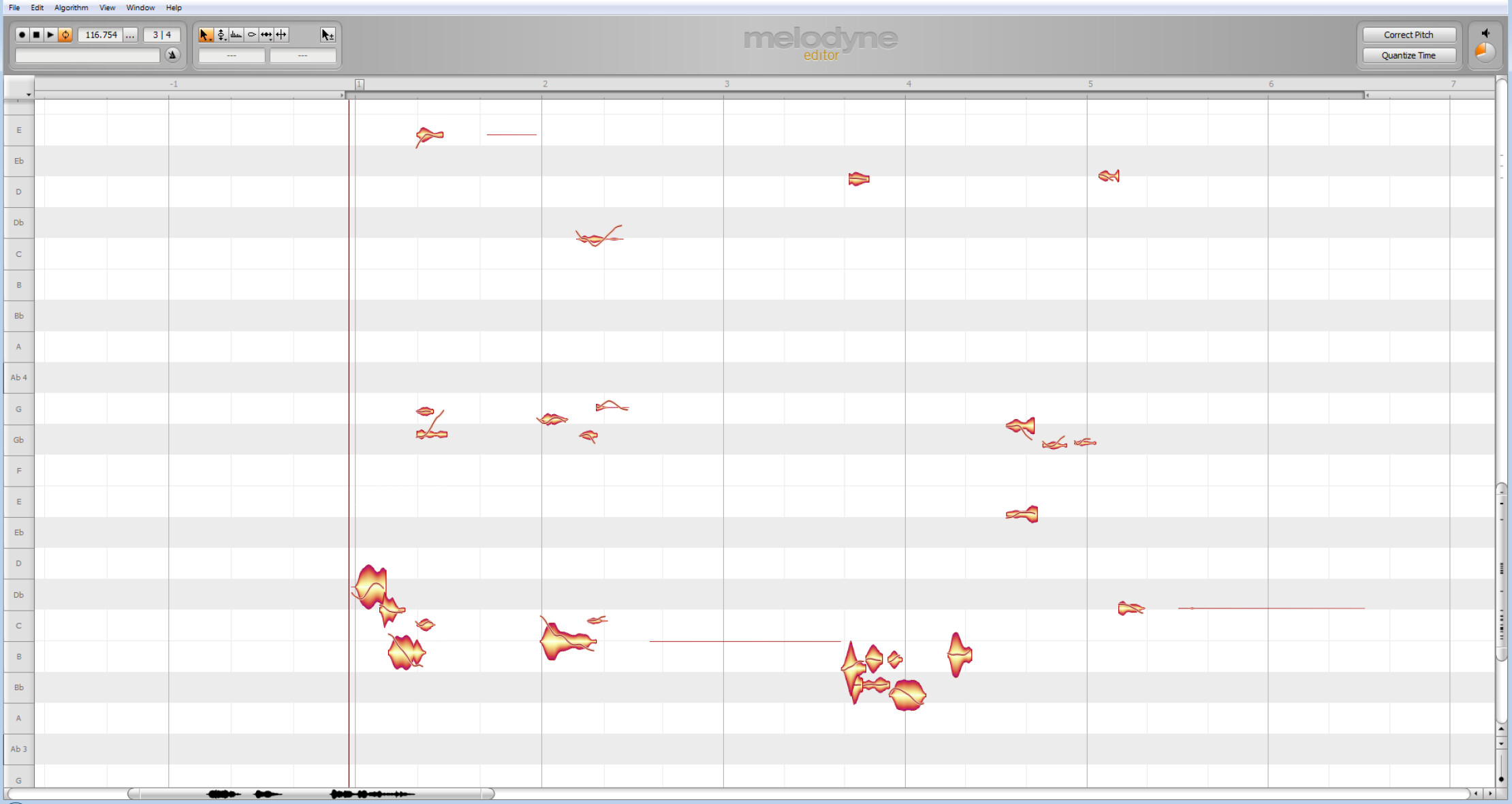
Here the artist implements an unlikely source from outside the musical world: spoken word poetry. The track opens with a sample from an open mic poetry reading, and has been creatively altered through the use of pitch shifting and timing adjustments, presumably through the use of an editing tool such as Melodyne. Remember, spoken word can almost be treated like a vocal line would be in this context - there are tonal components within our speech that can be transformed and given a new musical life. In the image below I've loaded a spoken word sample in to Melodyne, and it can clearly be seen that the human voice varies in its pitch over the course of a sentence. This is another window of opportunity for you to explore in your own music:
And just for reference, here is the original sample that was used in Kyle (timestamps: 1.02, 1.09 , 2.28): https://youtu.be/N8woLOuCctE?si=jdlBmXv5FTaU7olV
3. Experimental musical techniques:
One foolproof way to introduce originality into a track is to use out-of-the-box production and musical techniques. There are essentially endless possibilities here, but one that I like to use is what I refer to as "plugin artifacting," and below I've included a short of example of what this looks like in practice - skip to 1.22 to get straight to the point: https://youtu.be/GeT0pGCT1Z8?si=Rtqyz192B2FFuFrT
4. Make sure your aesthetic is equally as discernible as the music you are creating:
People don't just remember the music: the first thing they'll most likely encounter is an image of you promoting the track, such as the artwork, and so this needs to be something memorable that sticks in the minds of people. Again, your best bet here is to create something authentic and original. Artists would do well to remember that there exists a world of public domain imagery ranging back through the centuries, and it's all available at their disposal to use however they please (resources below). I've personally enjoyed stitching together various sketches/paintings/studies etc. from the late 1800s to create brand new works that fit the overarching theme of the music, and it only requires a very basic, preliminary knowledge of Photoshop, or whatever platform you choose to work with. Below are some examples of how I've utilised this technique:
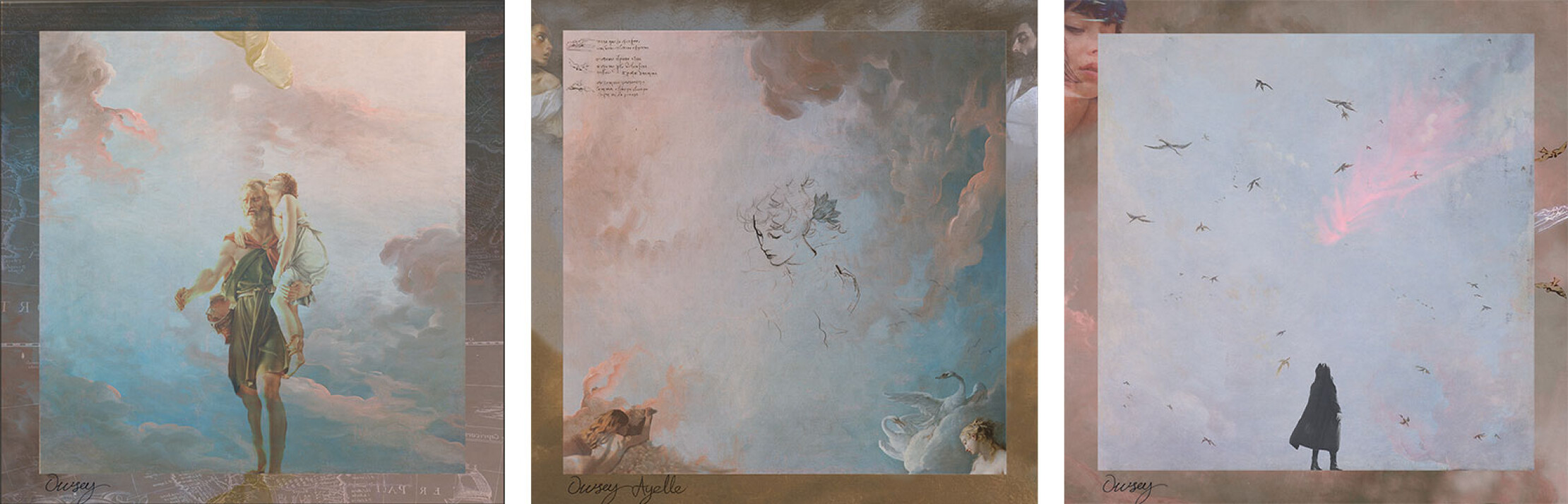
*note the consistency in the elements, such as the signature/borders/colour palette etc.
Remember, this extends not only to the artwork, but to the imagery you use on a daily basis, perhaps on your social media feeds. Develop your own aesthetic. This could be as simple as using the same filter on your images to create a sense of coherency. Think of interesting ways to conduct your press shots, for example. Ask yourself "what does my music invoke?" For example, if people tell you that they like to listen to your music whilst out hiking, consider drawing parallels between what your music inspires in people and the context of those press shots, i.e. take those pictures outdoors in a natural setting rather than in a photo studio.
Public domain imagery sources:
https://commons.wikimedia.org/wiki/Main_Page
https://images.nga.gov/en/page/openaccess.html
https://www.metmuseum.org/art/collection
5. Consistently use an identifiable and memorable "tag" in your tracks.
There is a particular sound that I use time and time again in my music, and I always get asked what it is. Using this sound has created a sense of allure, and to an extent, mystery (because I haven't revealed the original source of the sound). It has also given me a signature to be identified by - for instance, people have said they instantly recognise an Owsey track by "the whistle." Below are some examples of this repeating theme:
Owsey - And Then I Woke Up (0.01): https://youtu.be/4unDeT9G8gc?si=JWrUA5CWcWNkv9ST
Owsey - 27 Dreams (0.08): https://youtu.be/QvHa2lehzxk?si=P1S1zPfv4XRd5jdl
Owsey - Watching Her From Afar (1.37): https://youtu.be/_nTAgOEj9Rw?si=X5nohmg6-HXBX0Kd